


What Is a Banknote Sorter? A Guide to the GLORY USF-VT Series
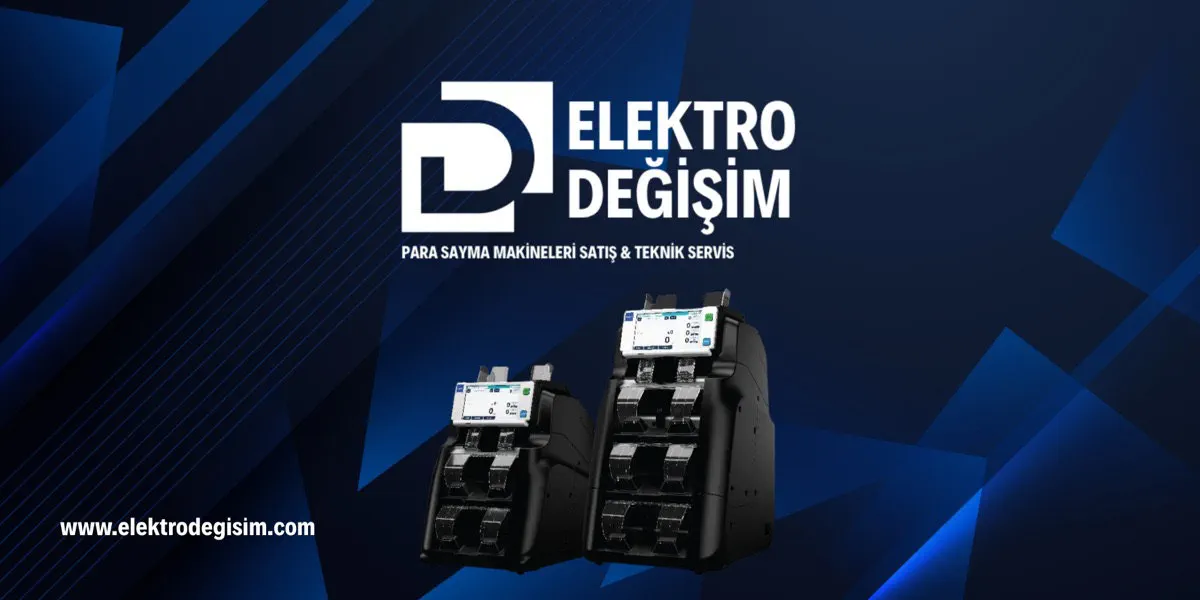
A money counting machine counts a stack and gives you the total. A banknote sorter also separates the notes into different pockets as it counts. At a cash desk that handles hundreds or thousands of notes a day, that separation removes the hand sorting that would otherwise follow the count.
In this article we explain what a sorter does, why fitness sorting matters, and the two models in GLORY's desktop sorter series, the USF-VT: the GLORY USF-VT2 and the GLORY USF-VT3. The information comes from GLORY's USF-VT datasheet and product page.
Money Counter or Banknote Sorter: the Difference
Most desktop money counters have two outputs: a stacker where counted notes land and a reject pocket where separated notes go. The GLORY GFS-220 is built this way: it recognises mixed denominations, works out the total value and sends unrecognised or suspect notes to the reject pocket. We explain what happens inside the machine in how does a money counting machine work.
A sorter has more than one stacker. After reading each note, the machine decides which pocket it goes to. When the count is finished, the notes are already grouped and there is nothing left to sort by hand. The reject pocket is still separate, so unrecognised or suspect notes never mix with the stackers. We cover its role in detail in what is a reject pocket on a money counting machine.
What Is Fitness Sorting?
Fitness sorting means separating notes by their physical condition. In its simplest form there are two classes: notes fit for circulation and unfit, worn notes. Soiling, tears, holes, tape repairs and folded corners are the main defects that make a note unfit; GLORY's UW-F Series also separates these defects as unfit.
In practice, fit notes can be reused while worn notes are kept apart. GLORY describes the same flow for cash centres: fit notes go back into circulation and unfit notes are returned to the central bank. For a busy exchange office it means handing customers clean notes without losing time picking out worn ones one by one.
Some machines make a finer distinction. The UW-F Series, for example, grades fitness in three levels: ATM fit, fit and unfit. When people talk about "two-way" or "three-way" sorting, they mean how many separate groups the notes can be divided into.
The GLORY USF-VT Series: Two Models
The USF-VT is GLORY's compact desktop sorter series. GLORY says it designed the series for bank branches and cash centres, small enough to fit a teller's workspace and robust enough for heavy use. There are two models:
- USF-VT2: 2 stackers + 1 reject pocket, two-way fitness sorting.
- USF-VT3: 3 stackers + 1 reject pocket, three-way fitness sorting.
| Feature | USF-VT2 | USF-VT3 |
|---|---|---|
| Stackers | 2 × 200 notes | 3 × 200 notes |
| Reject pocket | 100 notes | 100 notes |
| Fitness sorting | Two-way | Three-way |
| Value counting (notes/min) | 1,200 | 1,200 |
| Sorting (notes/min) | 1,000 | 1,000 |
| Hopper (notes) | 500 (opt. 1,000) | 500 (opt. 1,000) |
| Size (mm) | 333 × 432 × 449 | 335 × 472 × 566 |
| Weight | 23 kg | 26 kg |
Sizes are width × depth × height.
What Both Models Share
- Speed: up to 1,200 notes per minute in value counting and 1,000 in sorting and fit/unfit separation.
- Authentication: notes are authenticated as they are counted; suspect notes go to the reject pocket.
- Serial number reading: optional OCR at up to 1,000 notes per minute in supported currencies.
- Currencies: can be configured for up to 60 currencies and 750 denominations.
- Display: 7-inch full colour touchscreen.
- Easy maintenance: the note path opens fully, so jammed notes or foreign objects are easy to remove and the operator can carry out routine cleaning.
- Connectivity: LAN, USB, Micro SD card and RS-232C.
- Accessories: an external customer display and hopper extension guides.
USF-VT2 or USF-VT3?
Two questions decide it:
- How many groups do you need? If splitting notes into fit and worn is enough, the USF-VT2; if you need a third group, the USF-VT3.
- Where will the machine go? Because of the third pocket, the USF-VT3 is 117 mm taller and 40 mm deeper. If it will sit under a shelf or at a narrow counter, check the measurements first.
Speed, screen and hopper are the same on both. We look at each model in detail in our GLORY USF-VT2 review and GLORY USF-VT3 review, comparing the USF-VT2 with the GFS-220 and USF-200, and the USF-VT3 with the UW-F Series.
Does Every Business Need a Sorter?
No. For a business that counts a few stacks a day and has no need to separate notes, a good money counter is enough. A sorter is a larger and heavier machine: even the USF-VT2 weighs 23 kg, against 12 kg for the GFS-220. A sorter makes sense where real time is spent sorting notes by hand after counting: busy exchange offices, cash centres and bank branches. For the general buying criteria, see how to choose a money counting machine.
Service and Software Updates
The USF-VT2 and USF-VT3 are GLORY machines, which puts their maintenance and repair within our area of expertise. When a new banknote enters circulation, the machine needs a software update to recognise it; we explain why in why money counting machines reject new banknotes. As an authorised GLORY dealer we supply both models new, with a 2-year warranty.
Conclusion
A money counter counts; a sorter counts and separates. The GLORY USF-VT series does this in a desktop format: the USF-VT2 for two groups, the USF-VT3 for three.
If you are not sure which model suits your work, tell us your daily note volume and how you want the notes separated, and we will decide together. We ship worldwide from our centre in Istanbul.
Share this article