


How Does a Money Counting Machine Work, and How Do You Use One?
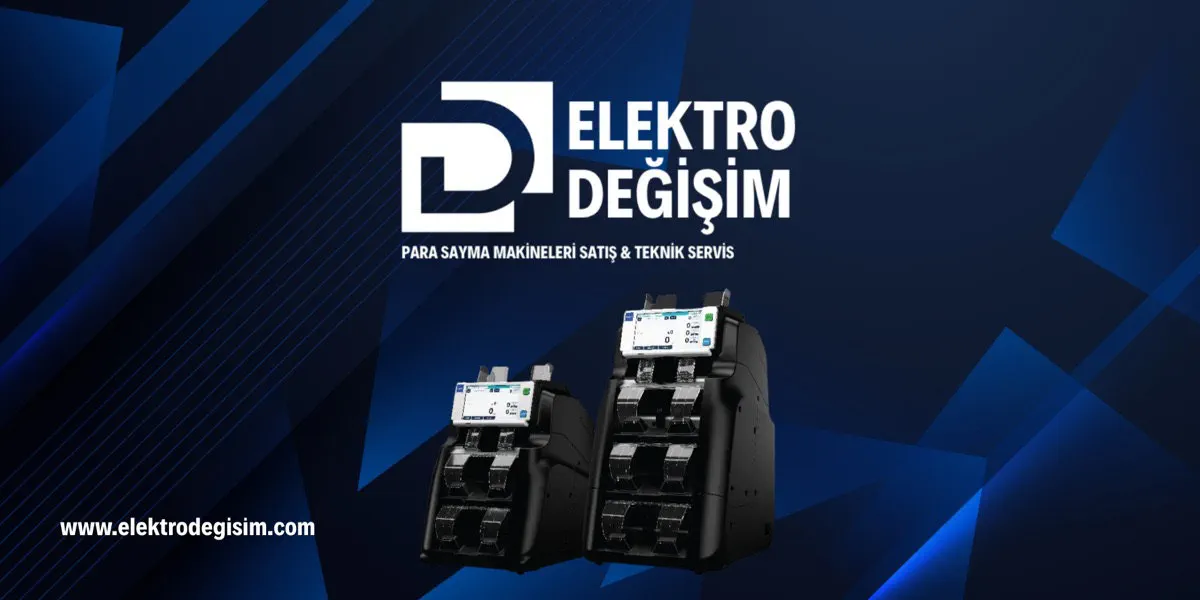
You place a stack in the hopper and a few seconds later the count and the total appear on the screen. So what happens inside the machine in those few seconds?
Knowing how a money counting machine works is not just a matter of curiosity. Understanding why the machine stops, why it sets a note aside or why it miscounts is also the way to use it properly.
In this article we follow a banknote through the machine and explain the counting modes and what to pay attention to in daily use.
A Banknote's Journey Through the Machine
The details vary from model to model, but most professional money counting machines work in the same four steps:
- Feeding: Rubber feed rollers pull the notes one by one from the stack in the hopper. A separating mechanism tries to stop two notes from passing through together.
- Measuring: The note passes the sensors at high speed. Each sensor measures a different property of the note.
- Deciding: The machine's firmware compares those measurements with the references in its memory: Is this a banknote, which denomination is it, is it genuine, did it pass through alone?
- Output: A note with no problems drops into the stacker (the front pocket). A problem note is either diverted to the reject pocket or the machine stops and warns you.
The whole process takes a tiny fraction of a second per note; a machine such as the GLORY GFS-220 can count up to 1,300 notes a minute.
How Does the Machine Count?
The most basic count is made by detecting each note as it passes an optical sensor: every pass adds one to the counter.
The real work is making sure the count is correct. To do that, the machine tries to catch the following:
- Double notes: If two notes pass stuck together, the difference in thickness or light transmission gives them away.
- Chained notes: If two notes pass overlapping, the length of the note and the gap between notes measure differently from normal.
- Half or torn notes: The size does not match the reference.
When one of these is detected, the machine either stops or sends the note to the reject pocket. We explain the advantage of a second pocket in what is a reject pocket on a money counting machine.
Can a Money Counting Machine Detect Counterfeits?
Models with counterfeit detection can, by combining several different sensors:
- Ultraviolet (UV): Banknote paper reacts to UV light in a particular way. Many counterfeits printed on ordinary paper glow differently under it.
- Magnetic (MG): Looks for the magnetic traces found in the ink of some banknotes.
- Infrared (IR): Checks the printed areas that appear or disappear under infrared light on a genuine note.
- Image sensor (CIS): Scans the surface of the note and compares its pattern, dimensions and denomination with the reference.
The more sensors there are and the more up to date the firmware, the higher the chance of catching a counterfeit. Even so, it is not accurate to say of any machine that "it catches every counterfeit, 100%". And a counterfeit warning does not mean a note is definitely fake: wear, dirt or outdated firmware can also trigger a warning.
We describe the checks you can make by eye in how to detect counterfeit money, and the role of firmware in why money counting machines reject new banknotes. For the US dollar and the euro, see how to spot a fake US dollar and how to spot a fake euro.
Piece Counting vs Value Counting
This is the most important feature that divides money counting machines into two groups.
A machine that does piece counting only answers "how many notes?". It assumes every note in the stack is the same denomination.
A machine that does value counting uses its image sensor to recognise the denomination of each note and answers "how much in total?". Give it a stack of mixed notes and it shows both the total value and the breakdown by denomination. These are the machines known as mixed-denomination counters. The GLORY GFS-220 and the GLORY GFS-120T belong to this class; we compare the two in GLORY GFS-220 or GFS-120T?
For banks and large cash centres there is a further class: sorters. These separate notes into different pockets by denomination, orientation or fitness (fit for circulation or worn). The GLORY USF-VT2, the GLORY USF-VT3 and the GLORY UW-F series are examples of such machines.
Common Counting Modes
Mode names vary by brand, but the logic is the same:
- Free count: Counts the stack and shows the result; the counter resets with the next stack.
- Add (accumulate): Keeps a running total of the stacks you load one after another. Used for amounts too large for the hopper.
- Batch: Stops when the number you set is reached, for example to prepare bundles of 100. The GFS-120T has presets of 5, 10, 20, 25, 50 and 100.
- Mixed (value) count: Recognises different denominations and calculates the total value.
- Single denomination (sort): Sets aside or stops at any note that differs from the selected denomination.
You will find which modes your machine has, and how to select them, in its user manual.
How to Use a Money Counting Machine, Step by Step
- Prepare the stack. Remove paper clips, staples, rubber bands and taped notes. Straighten folded corners. These are the most common causes of jams.
- Align the notes. Straighten the stack so the notes face the same way, and fan it gently so that notes stuck together come apart.
- Select the mode and currency. Counting a mixed stack in piece mode, or a foreign currency stack on the wrong currency setting, is a common mistake.
- Load the hopper properly. Do not exceed its capacity; the stack should sit within the hopper guides.
- Check the reject pocket. When counting finishes, assess the notes in the reject pocket together with the warning on screen and recount them individually if needed.
- Record the result. If your machine has a printer or a connection, take the count report.
- Dust it at the end of the day. Banknotes leave a surprising amount of paper dust. After switching the machine off and unplugging it, clean it as described in the manual with a dry, soft brush or cloth; unless the manual says otherwise, do not use liquid cleaners.
Can a Money Counting Machine Miscount?
A well-maintained machine that is used correctly very rarely miscounts. The most common causes of miscounting are worn feed rollers, dirty sensors, a separating mechanism that has gone out of adjustment, notes in poor condition and overfilling the hopper.
If you count the same stack several times and get different results, the problem is most likely mechanical. We go through the causes symptom by symptom in money counting machine errors.
When Should You Call Technical Service?
- The count is inconsistent even after cleaning,
- Notes jam or double-feed frequently,
- You keep getting counterfeit warnings on genuine notes,
- It does not recognise a newly issued banknote,
- The machine is making an unusual noise.
At Elektro Değişim we provide maintenance and repair (our expertise is GLORY) and software updates for GLORY, Hitachi and ProNote machines at our centre in Şişli, Istanbul. We serve the jewellers and exchange offices of the Grand Bazaar on site and also accept machines shipped to us from across Türkiye. For details, see our technical service page, or contact us with the make and model of your machine.
Share this article